

Ancient Architecture: Civilizations and Great Works in World Architectural History
A tour of the great architectural works of ancient civilizations and how their principles still shape modern design and construction.
Published · Tim Inland
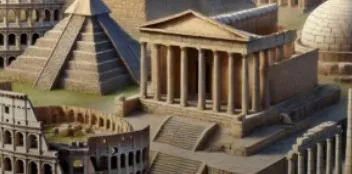
Table of Contents
- Ancient Egypt: Monuments for Eternity
- Mesopotamia: Ziggurats and Mud Brick
- Ancient Greece: Proportion and Order
- Rome: Arches, Domes, and Concrete
- India and South Asia: Stone Temples and Ornament
- China: Timber, Roofs, and Harmony
- Mesoamerica: Stepped Pyramids and Planned Cities
- Lessons for Today’s Buildings
Ancient architecture is a mirror of civilization. From the pyramids on the Nile to the stone temples of Asia, every building tells a story about the beliefs, technology, and way of life of the people who built it. Understanding it helps us see how design principles still used today — proportion, orientation, and material choice — grew out of thousands of years of experience.
Ancient Egypt: Monuments for Eternity
The Egyptians built for eternity. The pyramids of Giza and the temples of Karnak and Luxor show remarkable mastery of limestone and granite. The pyramid’s wide base and tapering form are extremely stable, while massive columns carved with papyrus and lotus motifs combine structure with symbols of life.
A lesson still relevant today: building orientation. Many Egyptian temples were aligned with the sun’s movement — a principle we now apply in natural lighting design.
Mesopotamia: Ziggurats and Mud Brick
Between the Tigris and Euphrates, stone was scarce, so the Sumerians and Babylonians relied on sun-dried or fired mud brick. The ziggurat, a stepped pyramid-like structure, was the religious heart of the city.
Mesopotamia teaches that good architecture makes use of local materials — a principle aligned with today’s sustainable design.
Ancient Greece: Proportion and Order
Greek architecture is known through temples such as the Parthenon in Athens. The Greeks defined the classical orders — Doric, Ionic, and Corinthian — governing the proportions of columns, beams, and ornament. They even used optical corrections, such as columns with a slight swelling so they appear straight from afar.
Greek influence lives on in classical facades, including modern classic homes with columns and symmetry.
Rome: Arches, Domes, and Concrete
The Romans built on Greek foundations with engineering innovation: the arch, the dome, and Roman concrete. The Pantheon’s great dome, the Colosseum, and the aqueducts that carried water into cities show that architecture also serves public infrastructure.
Rome proved that new materials and structural systems unlock larger spans — the foundation of modern construction.
India and South Asia: Stone Temples and Ornament
Ancient Indian architecture produced Buddhist stupas, rock-cut Hindu temples, and cave complexes such as Ajanta and Ellora. Rich ornament and spiritually meaningful layouts are its hallmarks. Its influence spread across Southeast Asia, including the Indonesian archipelago through temples such as Borobudur and Prambanan.
China: Timber, Roofs, and Harmony
Ancient Chinese architecture relied heavily on timber frames with nail-free joinery and broad, curved roofs. Building complexes followed axes and balance, reflecting harmony with nature. The Great Wall shows construction on an extraordinary scale for defence.
Mesoamerica: Stepped Pyramids and Planned Cities
The Maya, Aztec, and Teotihuacan civilizations built stepped pyramids with stairways and cities planned in harmony with astronomy — proof that urban planning matured long before the modern era.
Lessons for Today’s Buildings
- Design for climate and context. Ancient buildings used solar orientation, wind, and local materials.
- Proportion creates beauty. Order and proportion make buildings feel balanced and comfortable.
- Structure and aesthetics go together. Arches, columns, and domes are both structural and decorative.
- Build to last. Material quality and craftsmanship determine a building’s lifespan.
At Inland we apply these principles in every project — from house design and interior design to house construction. Want a home that is beautiful, functional, and built to last? Talk to our team.
Read also: Architecture: history, elements, and its role in civilisation · Modern tropical house design
Related Articles

Architecture: Its History, Elements, and Role in the Development of Human Civilization
The history of architecture through the ages, its core elements, and its physical, psychological, and social functions for people.
Modern Tropical House Design: Key Features and Tips for Indonesia's Climate
A modern tropical house combines a contemporary look with design that responds to heat, humidity, and heavy rain. Learn its key features, suitable materials, and design tips.

Minimalist Home Interior Design: 12 Ideas to Make a Small House Feel Spacious
A small home doesn't have to feel cramped. These 12 minimalist interior design ideas—from colour and light to multifunctional furniture and built-in storage—make it feel open and comfortable.