

Architecture: Its History, Elements, and Role in the Development of Human Civilization
The history of architecture through the ages, its core elements, and its physical, psychological, and social functions for people.
Published · Tim Inland

Table of Contents
- A Brief History of Architecture
- Prehistory and Ancient Civilizations
- The Middle Ages
- The Renaissance
- The Modern Era
- Contemporary Architecture
- The Basic Elements of Architecture
- Space
- Form
- Structure
- Material
- Light
- The Functions of Architecture
- Architecture’s Role in Civilization
- Design Your Building with Inland
Architecture is the art and science of designing the buildings and spaces where people live, work, and gather. It is more than construction: it balances function, structural strength, and beauty — three principles the Roman architect Vitruvius summed up as firmitas, utilitas, venustas.
A Brief History of Architecture
Prehistory and Ancient Civilizations
People first sheltered in caves, then built simple dwellings from timber, earth, and stone. Ancient civilizations such as Egypt, Mesopotamia, Greece, and Rome went on to create great monuments, temples, and urban infrastructure. Read also: Ancient Architecture: Civilizations and Great Works.
The Middle Ages
In Europe, the Romanesque style brought thick walls and round arches, followed by the Gothic style with pointed arches, stained glass, and flying buttresses that made buildings taller and brighter. Elsewhere, Islamic architecture flourished with domes, minarets, and geometric ornament.
The Renaissance
From the 15th to the 17th century, classical Greco-Roman principles returned: symmetry, proportion, and order. Architects began using perspective and mathematics in design.
The Modern Era
The Industrial Revolution introduced steel, glass, and reinforced concrete, making tall buildings possible. Twentieth-century modernism emphasized function, clean lines, and open space — often summarized as “form follows function”.
Contemporary Architecture
Today architecture moves toward sustainability, energy efficiency, and digital tools such as 3D modelling. In Indonesia, modern tropical architecture blends contemporary design with the needs of a hot, humid climate.
The Basic Elements of Architecture
Space
Space is the heart of architecture: how it is divided, connected, and experienced. Good space planning makes daily activities smooth and comfortable.
Form
Form gives a building its character — simple and minimalist, bold and modern, or ornate and classical.
Structure
Structure keeps a building standing: foundations, columns, beams, walls, and roofs designed to carry loads, wind, and earthquakes.
Material
Materials affect strength, appearance, maintenance, and cost. Choosing materials suited to the local climate makes buildings last longer.
Light
Natural and artificial light shape the mood of a space. Window openings, skylights, and orientation determine how bright and cool a room feels.
The Functions of Architecture
- Physical: protecting occupants from the weather and providing security.
- Psychological: bright, spacious, well-organized spaces make people more comfortable and productive.
- Social and cultural: buildings host interaction and express a community’s identity.
- Economic: good design increases property value and efficiency.
Architecture’s Role in Civilization
The history of civilization can be read through its buildings. Architecture records each era’s technology, values, and aspirations. Today it also plays a key role in responding to urban challenges, climate change, and growing housing needs.
Design Your Building with Inland
Inland applies these principles — function, strength, and beauty — in all of our architect services, house design, and interior design. Contact us for a free consultation.
Read also: Modern tropical house design · Minimalist home interior design · Construction: process, history, and role in infrastructure
Related Articles
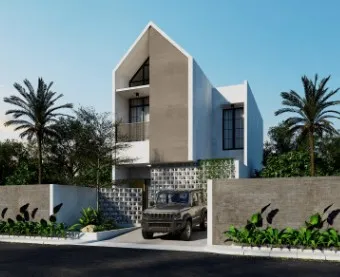
Modern Tropical House Design: Key Features and Tips for Indonesia's Climate
A modern tropical house combines a contemporary look with design that responds to heat, humidity, and heavy rain. Learn its key features, suitable materials, and design tips.
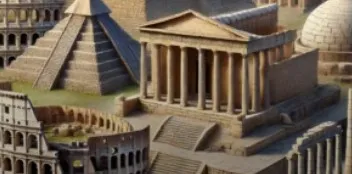
Ancient Architecture: Civilizations and Great Works in World Architectural History
A tour of the great architectural works of ancient civilizations and how their principles still shape modern design and construction.
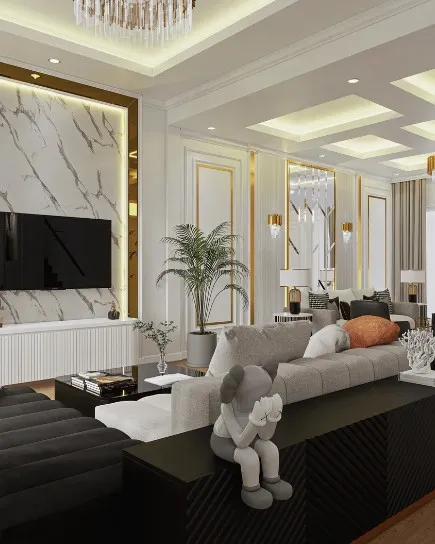
Minimalist Home Interior Design: 12 Ideas to Make a Small House Feel Spacious
A small home doesn't have to feel cramped. These 12 minimalist interior design ideas—from colour and light to multifunctional furniture and built-in storage—make it feel open and comfortable.